Egypt itinerary – your perfect 11 day guide
When we started planning our Egypt trip, we knew we wanted it to be unforgettable, which meant creating the perfect itinerary. What we didn’t expect was the goosebumps of standing under the Pyramids of Giza, floating weightless in Siwa’s salt lakes, or watching the sunrise paint Abu Simbel gold.
The big difference is this wasn’t just another trip for just the two of us. It was a birthday trip for Justin’s mum. Altogether, we were seven traveling together, so we needed everything to go as smoothly as possible.
Usually, we explore independently, renting a car and stopping when and where we want. However, Egypt is different, and it’s much better to let a local agency handle the drivers, guides, and Cairo traffic.
That choice saved us a great deal of stress and allowed us to focus on what mattered: soaking in the history, laughing together, and collecting those “wow, we’re really here” moments.
In this 11-day Egypt itinerary, you’ll find the exact route we took, which includes highlights, hidden gems, optional add-ons, and even a few things we’d change if we did it again.
Whether you’re planning your first visit or a family adventure, this guide will help you get the most out of your time in Egypt.
Before You Go – Egypt Travel Tips
Best Time to Visit Egypt
The ideal time to visit Egypt is between October and April, when daytime temperatures are warm yet manageable. We visited at the end of November, and it was perfect for sightseeing. It was sunny but not scorching, with cooler evenings for exploring Cairo and Luxor.
Visa, Entry, and Airport Tips
Most travelers can either apply for an e-visa before arrival or obtain a visa upon arrival at the airport. We chose the on-arrival option and were pleasantly surprised to find no queue at the kiosk. The whole process took just a few minutes.
After collecting your luggage in Cairo, don’t be surprised if there’s another queue. Bags are sometimes scanned again before you’re allowed to leave the baggage hall. Once you’re through, you’ll see counters for all the major mobile providers. This is the easiest spot to buy a local SIM card. We grabbed ours right there and had the data sorted before even leaving the airport. It made navigating, messaging drivers, and checking bookings much smoother.
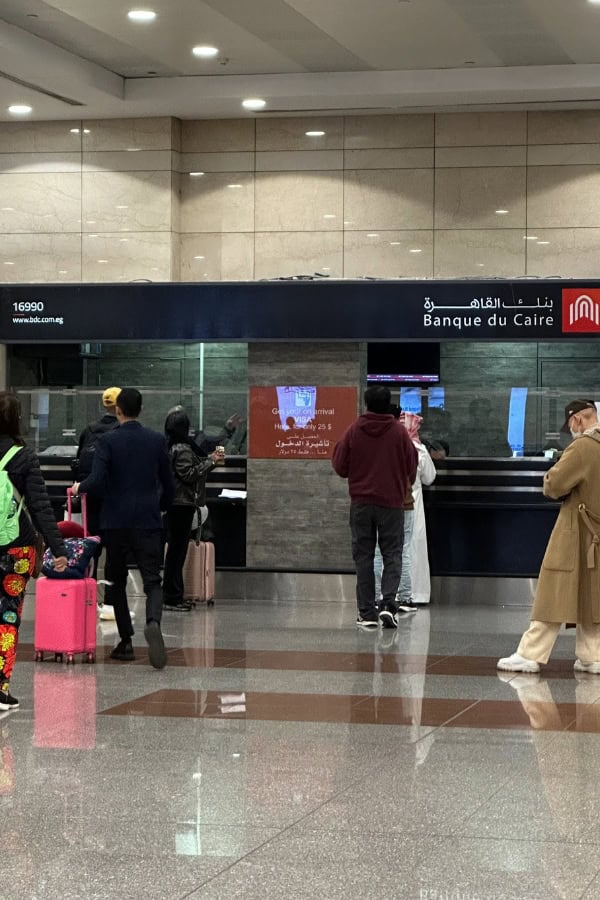
📌 Important: Drones are not allowed for tourists and may be confiscated at the airport. Leave them at home; it’s not worth it. We’ve heard stories of them being not only confiscated but literally smashed in front of your eyes.
Money & Currency in Egypt
We exchanged money at the bank counters inside the airport. We researched before our trip that those kiosks offer the same government-set rate. In the past, travelers relied on the unofficial market for better deals; however, these days, the difference is minimal.
The bigger challenge is when you want to exchange money back. The best way is to convert your cash to Egyptian pounds gradually rather than all at once. That way, you won’t have an issue exchanging the money back.
Most of the time, you pay in U.S. dollars for trips and experiences. However, we would recommend tipping in Egyptian pounds. If you do decide to use dollars for tipping, please avoid bringing too many $1 notes. We discovered that locals cannot easily exchange them, which makes them less valuable. Higher denominations or tipping in local currency works much better.
Getting Around Egypt
Usually, we’d be the first ones to recommend you book a car when exploring a new place. We love the flexibility it provides and how much more we discover as a result. However, Egypt is not that country, as we learn from our research, especially when traveling as a larger group; a little local assistance goes a long way. Cairo’s chaotic traffic, for one, would be the most stressful experience. Additionally, distances between sites can be significant, and public transportation is unreliable.
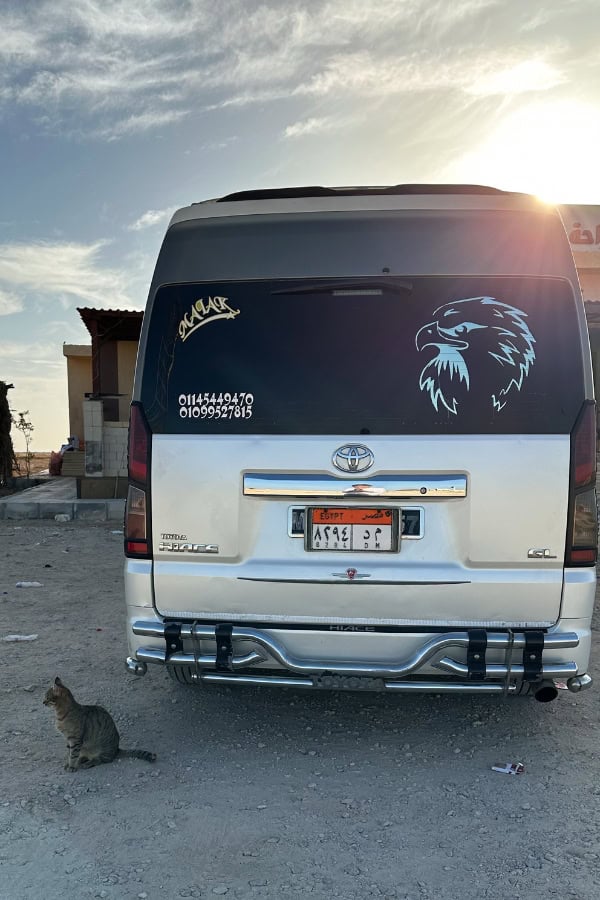
We decided to use a local agency for drivers and guides this time, which made everything seamless. For our group of seven, it meant one big vehicle instead of juggling two taxis, plus a driver who knew the roads and a guide who handled tickets and timing. It gave us more time exploring and less time waiting around.
For longer distances, we skipped the trains and relied on domestic flights. We flew from Cairo to Luxor and returned from Aswan to Cairo. This saved us hours and allowed us to maximise our time exploring. However, if you have more time, we’ve heard great things about taking a slow boat down the Nile.
Packing Tips for Egypt
Pack light but practical. Think breathable clothing that covers shoulders and knees, a scarf for mosque visits, and good walking shoes. You’ll cover serious ground at the pyramids and temples, so you’ll want to have comfortable shoes.
Sun protection is non-negotiable (hat, sunglasses, high SPF), and a power bank was one of the most valuable items we carried, since days often stretched long from sunrise to sunset.
Safety in Egypt
Egypt has a bit of an unfortunate reputation for bothering tourists, pushy salespeople, scammers or pickpockets.
Having local guides made most of this a non-issue for us; they dealt with ticket officers, police checkpoints, and most people didn’t approach while we were guided.
However, we can say that especially in Cairo or in the markets around tourist attractions, you will be called out to by salespeople offering knick-knacks, photo opportunities, or animal rides – you have to give up the idea of ‘being polite’ and give them a firm NO. If that doesn’t stop them, just keep on walking away.
Cairo & Luxor Pass Explained (2025 Update)
If you’re visiting multiple sites in Cairo, Giza, or Luxor, the Cairo Pass and Luxor Pass can save you time and money. It all depends on how long you’re staying in each area and what you’re planning to see.
Each pass is valid for five consecutive days and gives unlimited entry to the included attractions during that period.
- Cairo Pass – covers Cairo, Giza, and Saqqara sites (including pyramids and museums).
- Luxor Pass – covers temples and tombs in Luxor; excludes Seti I and Queen Nefertari tombs.
- Premium Luxor Pass – includes everything, with one daily entry to Seti I and Nefertari tombs.
When you buy the Cairo Pass, you get a 50% discount on the Luxor Pass. It is worth it if you’re planning to visit some temples multiple times or spend more time in those areas.
As of mid-2025, prices are $130 for standard passes and $250 for the Premium Luxor Pass. Payment is cash only (new USD or Euro bills).
📍 Where to Buy:
- Cairo Pass – Main Ticket Office at Giza (Mena House Gate) or the Egyptian Museum.
- Luxor Pass – Karnak Temple ticket office or Valley of the Kings Visitor Centre.
Tip: Always keep your pass protected and ask guards to return it after scanning — it’s valid for multiple entries!
10-Day Egypt Itinerary at a glance
Here is a quick overview of our Egypt itinerary, so you can get a feel for it, and then dive into more details below.
Egypt Itinerary Day 0 – Arrival
Arrival in Cairo & Overnight Transfer to Siwa Oasis
We arrived in Cairo just before midnight and picked up our visa on arrival. It was a quick, no-queue process, and the visa cost us $25 per person. After collecting our bags (there is a final luggage scan before you leave for arrivals), we exchanged some money at the airport bank.
Before leaving, we also bought a local SIM card from the kiosks outside the luggage hall. Having data from the start was important and helpful, as we could message our driver and get Google Maps straight away.
Stepping outside into Cairo’s arrivals chaos was a bit overwhelming. Prepare for honking cars, drivers shouting and holding signs, and a rush of people.
Luckily, we spotted our transfer after a short wait and set off immediately for Siwa Oasis. The journey to Siwa Oasis takes around 9 hours, and we recommend traveling overnight to save on precious daytime for exploring.
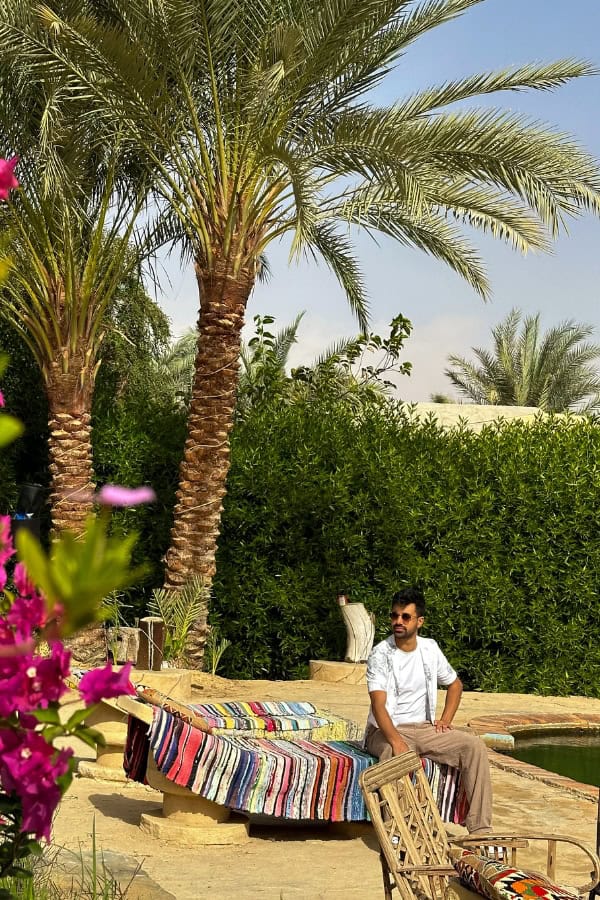
Be prepared for army checkpoints along the way (keep your passport handy). If you decide to travel at night, make sure you ask for a car that has plenty of space for you to stretch and sleep.
💡 Tips for the Cairo to Siwa Drive
- Overnight travel saves a full day for sightseeing.
- Army checkpoints line the road, so keep your passport handy.
- Ask for a vehicle with reclining seats; you’ll appreciate it after a long night.
- There are shops along the way so you can pick up snacks and use the toilet.
Egypt Itinerary Day 1 – Siwa’s Nature
Siwa’s Salt Lakes, Cleopatra Spring & Desert Safari
We reached Siwa around 10 am. Our room was already available because places here cater to tourists travelling at night, which is great. We stayed at Mountain Camp. It was a very rustic and cute place. After we had a little rest and a quick shower, we headed out to explore.
Salt Lakes and Cleopatra Spring
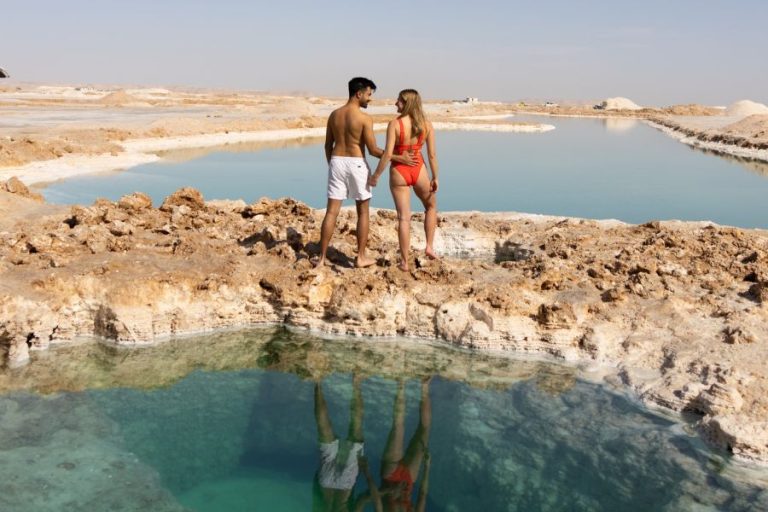
Our first stop was the salt lakes, where you float effortlessly in the clear, mineral-rich water. It’s a surreal experience; we experienced something similar in the Dead Sea in Jordan, but here in the lakes, the water is completely still and without the oily coating you get in the Dead Sea.
Please note that those lakes are within a working salt mine, so their exact locations may change. There are quite a few different ones, some larger, used by locals, and a few smaller, more private pools located a little further out. Trust us, you’ll want those smaller pools, so ask your guide to take you there instead of the big one where the bus tours go.
We highly recommend bringing fresh water with you to rinse. Being covered in salt crystals makes putting clothes back on pretty uncomfortable.
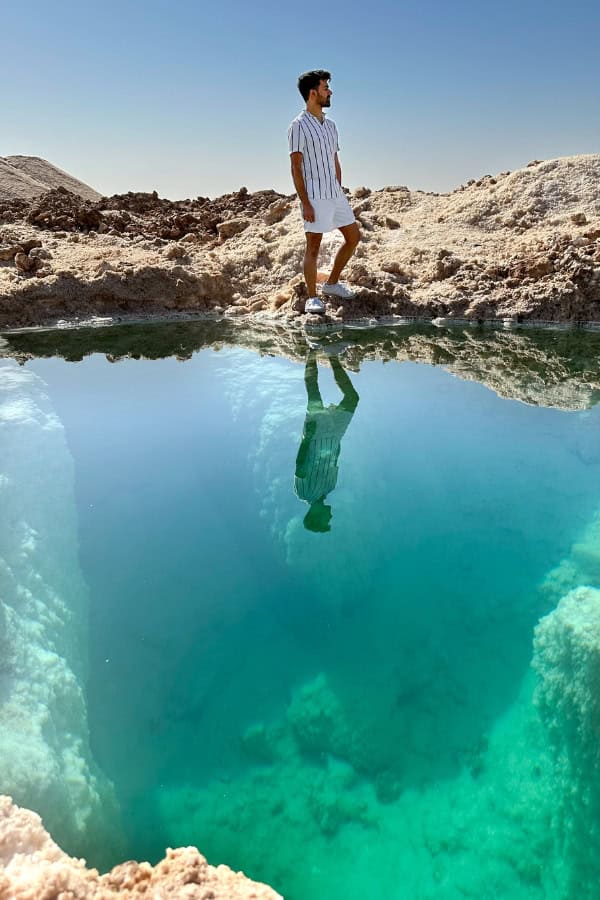
From there, we visited Cleopatra Spring, a deep natural pool surrounded by cafés. It’s popular with locals and can be quite busy, but it’s worth stopping for a fresh juice.
It is a local Siwa drink called Siwi Juice. It is a blend of banana, dates, coffee, and milk, and it quickly became our favorite. Even Justin, who doesn’t like coffee, loved it.
Sahara 4×4 safari
The highlight of the day was our desert safari. We got into a 4×4 and had a great time. Our driver sped across the Sahara dunes, and the Arabic music blasting made it even more enjoyable.
We stopped for some sandboarding down the dunes, and ended the evening by watching the sunset and savoring sweet lemongrass tea. It was the perfect ending to our first day in Siwa.
Check out our full article for Things to do in Siwa Oasis for more details, tips, and the cost of our 2-day visit.
Egypt Itinerary Day 2 – Siwa’s History
Siwa’s History & Culture
We started our morning early to climb Gabal Dakrur to watch the sunrise from the top. Unfortunately, the weather was cloudy and very windy, which meant poor visibility from the raised sand, so we missed out. However, on a clear day, sunrise from here is said to be unforgettable.
After breakfast, we went to town to explore the Shali Fortress, a 12th-century mud-and-salt citadel. It is a truly unique structure on a global scale. From there, we headed to the Oracle Temple of Amun.
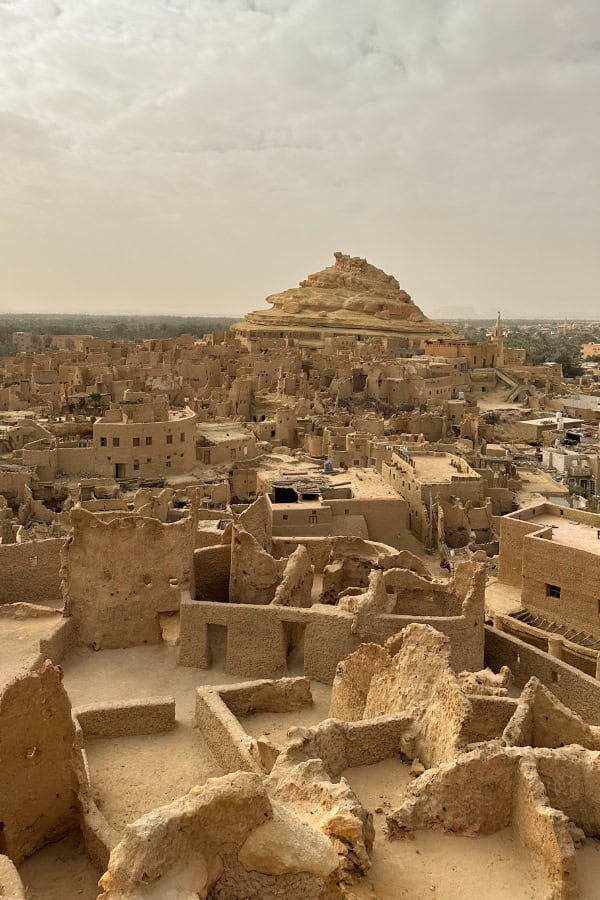
Another historically significant place. It is the same temple where Alexander the Great was declared the son of Amun in 331 BC. It felt surreal to walk in the same place as him.
In the afternoon, we visited the Mountain of the Dead. Another must-visit place when visiting Siwa. It is an ancient necropolis with tombs carved into the hillside. There are a few tombs you can enter and have a first glimpse of hieroglyphs, which was very special.
We ended the day at Fatnas Island. As the evening was still cloudy and even windier, we didn’t get to see the sunset. However, the lake setting was a lovely place to finish our trip to Siwa Oasis (with another Siwi juice!).
That evening, we packed as we had an early start and a long drive back to Cairo the next day.
Egypt Itinerary Day 3 – travel day
Return to Cairo & Pyramid-View Stay
We woke up early and set out before 5 am, arriving in Cairo shortly after 4 pm. As we were quite tired from the drive, we didn’t plan anything for the afternoon apart from relaxing, but the journey to Siwa Oasis was totally worth it.
We checked in at Cairo Pyramids Hotel. We chose this hotel because it is situated opposite the Grand Egyptian Museum, which we thought we could walk to. Little did we know that it was not possible, due to roadworks and road layout. Trust us, with the number of lanes on the highway outside, you really don’t want to walk from here.
However, it was also only 3 km from the Pyramids and Sphinx, which was extremely convenient for exploring the next day. If you want to stay within walking distance, check out day 11 below for details!
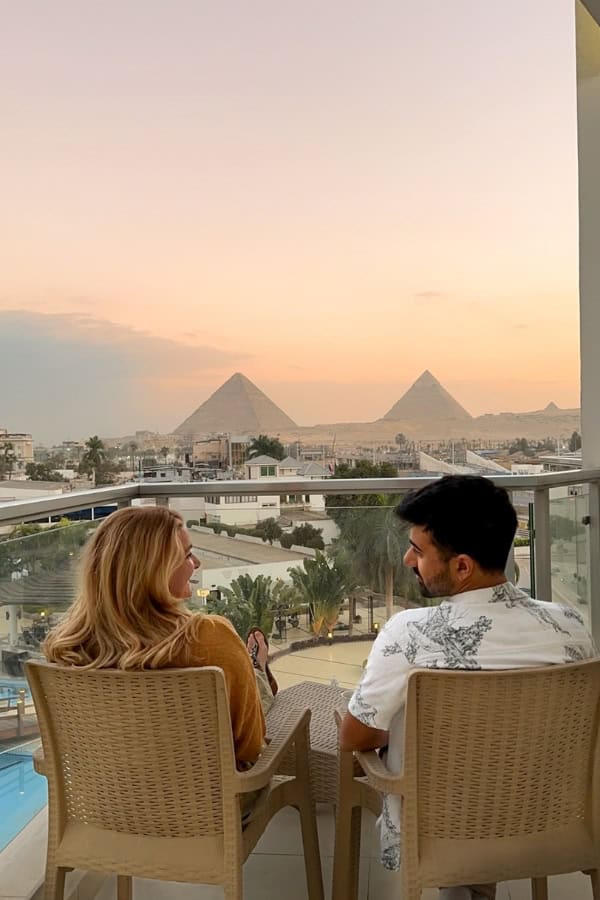
If views matter to you (they did to us), we recommend requesting a room with a view of the pyramid. We enjoyed relaxing on our balcony that overlooked the Giza Plateau.
Egypt Itinerary Day 4 – Pyramids
The Pyramids of Giza & the Grand Egyptian Museum
We set off early in the morning for the Pyramids of Giza, aiming to arrive by 8 am for the opening. The opening hours of the Giza Pyramids depend on the season:
- 8 am – 4 pm in the winter (October to March)
- 7 am – 5 pm in the summer (April to September)
The entry fee to the complex is 600 EGP, and the entrance (inside) to The Great Pyramid of Khufu costs 1500 EGP. You can enter other pyramids as well, and prices vary, so check out on arrival.
You can get a Cairo Pass if you’re planning multiple visits to the pyramids and museums. Otherwise it s not worth getting it. We cover this in more detail below.
If you want to arrive early, please factor in morning traffic, as it can be heavier than it appears. We learnt that what looks like a five-minute drive is more like fifteen or more. As a result, we arrived a bit later than we planned.
Even so, getting there early was worth it. There were already people around, but nothing like the crowds that poured in later in the day. For a better experience, we recommend arriving a little before they open, before the big bus tours arrive.
Visiting with a Guide and Driver
We had both a guide and a driver with us, which made things so much smoother. The guide pointed out a few interesting details and photo spots, and most importantly, kept us from getting lost around the site.
Our driver stayed with the car, so we could safely leave our belongings inside and not have to carry them around.
📌 2025 update at Giza
You can no longer access the plateau in private cars. Visitors move around the site using hop-on/hop-off electric buses and carts from the new visitor center. It’s efficient, but lines can form at peak times, so plan accordingly.
Entering the Great Pyramid
Going inside the Great Pyramid of Khufu is not for everyone. It’s quite hot, claustrophobic, and there isn’t much to see inside.
However, for us, the experience was still worthwhile. There’s something unforgettable about saying you’ve actually been inside the only remaining ancient wonder of the world.
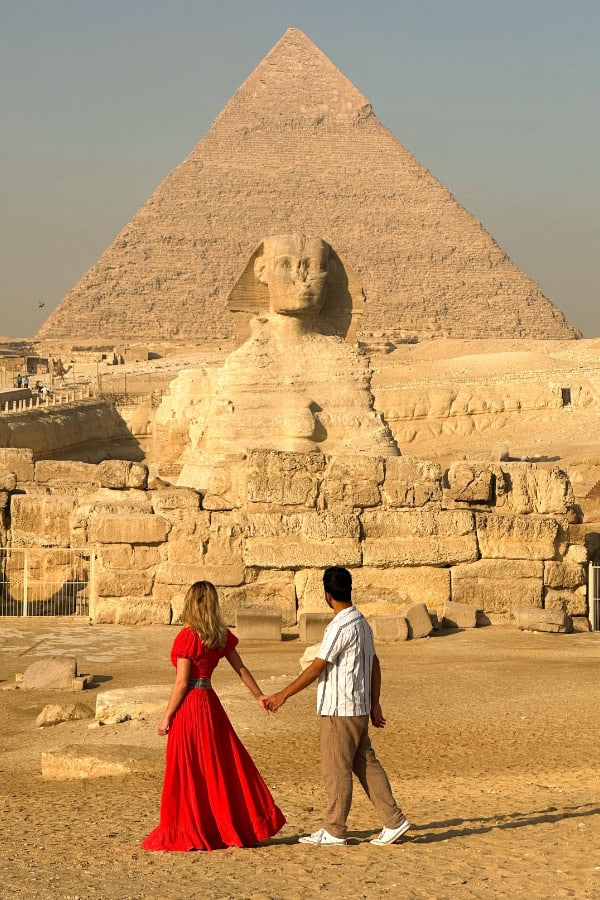
Since we arrived early, the tunnels weren’t too crowded, and we even had space to pause and take a few photos. If you can only visit one pyramid, make it this one.
How Long Do You Need at Giza
We didn’t get exceptionally close to the smaller pyramids, and honestly, there isn’t much to see beyond the main structures. If you don’t plan to take hundreds of photos or go inside multiple pyramids, you can visit Giza in just a couple of hours.
However, you can easily spend hours exploring and walking the Plateau. It all depends on your interests.
Lunch at 9 Pyramids View
After exploring, we went for lunch at 9 Pyramids View, a restaurant overlooking the entire Giza Plateau. Getting there required a short drive, and cars are only allowed in with a reservation QR code, so make sure you book ahead. We did it via WhatsApp.
For the best experience, we recommend asking for an outdoor table. The indoor seating feels more like a café, but outside, you get sweeping views of pyramids.
The food itself was surprisingly good: mains were around 500–600 EGP, which is pricey for Cairo but worth it for the setting. Enjoying our lunch while gazing at the pyramids was the perfect way to wind down.
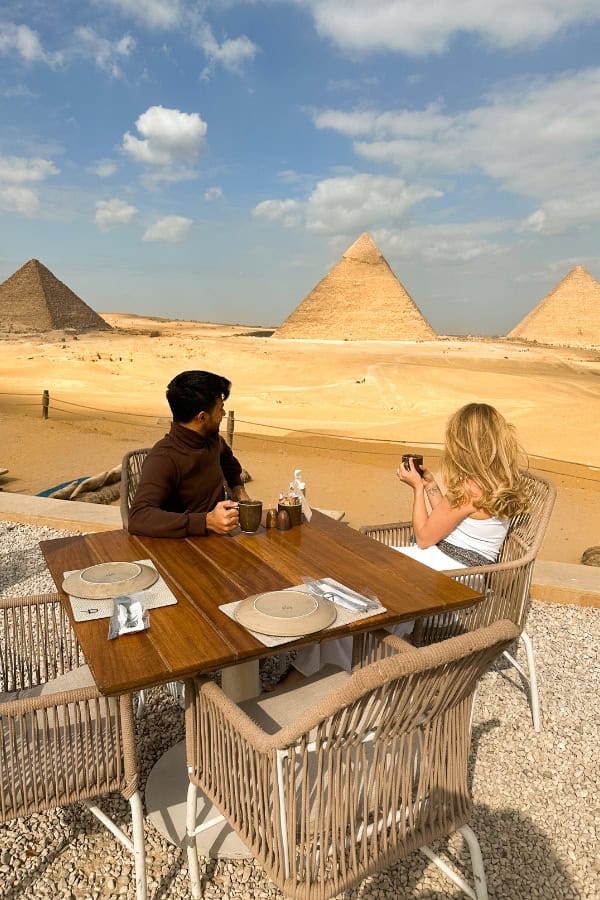
Fun fact: this restaurant is called 9 Pyramids because you can actually see all 9 pyramids from here (Makes sense, right?)
Afternoon at the Grand Egyptian Museum
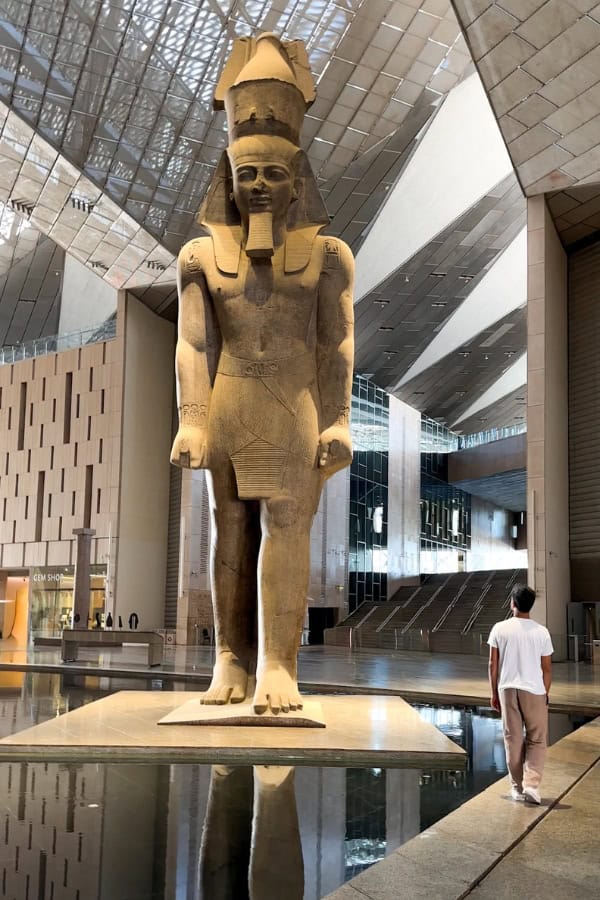
In the afternoon, we headed to the Grand Egyptian Museum (GEM), Egypt’s long-awaited new cultural landmark.
When we visited (Nov 2024), it wasn’t fully open yet; however, there was still a LOT to explore in the galleries. The full opening is planned for the 4th quarter of 2025, but the date is still not confirmed.
Despite still being finalised, the galleries available to explore were really impressive, and we spent a whole afternoon there.
The museum is very spacious and beautifully laid out. It feels like the artifacts are given space to be admired and taken in. It’s grand and modern.
It’s the perfect place to connect the dots after seeing the pyramids in person, and in some areas, you can even see pyramids from the museum.
Tickets for tourists cost 1220 EGP, approximately $26. You can buy them online on the main Grand Egyptian Museum website.
Tip – Visit the museum in the afternoon and stay for sunset. The lighting is gorgeous, making the place even more magical.
Dinner on the Nile – Andrea
We finished the day with dinner at Andrea on the Nile, a boat restaurant with a buffet and live show. Unfortunately, it didn’t live up to the hype. The boat was overcrowded, the buffet options were limited, and the overall experience felt rushed. The live entertainment was enjoyable, but not enough to warrant a recommendation.
Cairo has far better dining options, so skip this Nile cruise. A dinner cruise on the Nile sounded romantic and unique, but the reality of it was far from it.
There are better places for dinner, and you actually can enjoy delicious food with a view over the pyramids. Places like Rooftop 7000 and Khufu’s Restaurant are popular for a reason, so we would recommend stopping there. They were recommended to us by a few of our friends.
A Note on Animal Welfare at Giza
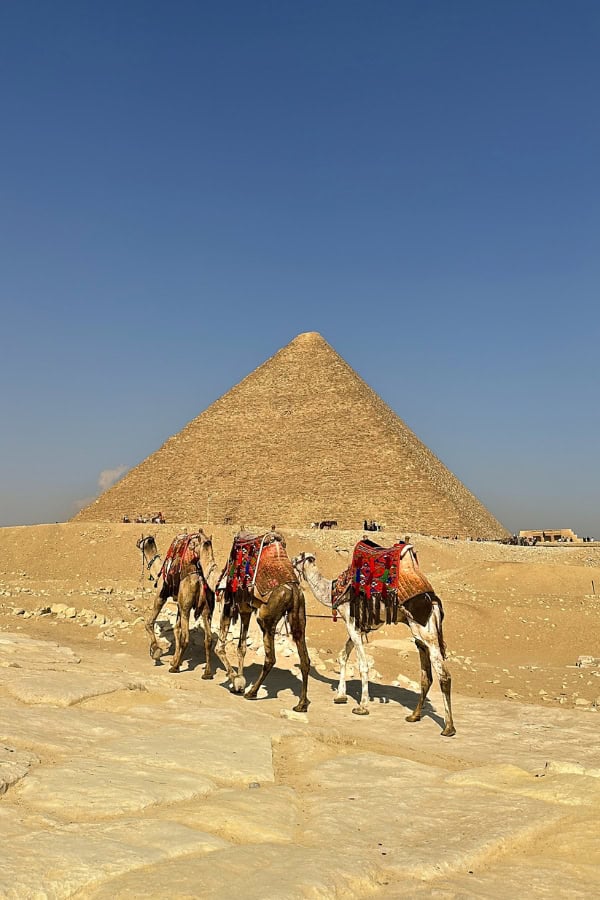
At the Pyramids of Giza, many people offer camel or horse rides for photos and transport. While it may look traditional or fun, the reality is often very different.
Many of these animals work long hours under the hot sun without enough shade, water, or proper care, and investigations have repeatedly found signs of mistreatment.
We don’t support using animals for tourism, and the best way to help is simple: say no to rides and photo ops.
Better Alternatives
- Walking tours: The main pyramid complex is very walkable, and you’ll notice much more when exploring at your own pace.
- Electric carts: These operate around the site and are an excellent alternative for covering more ground without relying on animals.
By choosing these alternatives, you’ll not only have a more comfortable experience but also help reduce demand for practices that exploit animals.
Tips for Visiting the Giza Pyramids
- Go Early: Arrive at opening (8 am) to avoid heavy crowds and the worst of the heat.
- Traffic is Slow: so make allowance for it if you travel to the pyramids.
- Hire a Guide & Driver: A guide makes navigating easier, while a driver saves you from parking hassles and carrying valuables around.
- Lunch with a View: Reserve ahead at 9 Pyramids View and request an outdoor table for the best panoramic view.
Bonus Photo Spot: There’s a roadside viewpoint on the way back from 9 Pyramid where all three pyramids align. It’s worth stopping there and taking some pictures.
Egypt Itinerary Day 5 – Cairo
National Museum of Egyptian Civilization, Citadel & Egyptian Museum
National Museum of Egyptian Civilization (NMEC)
We began the day at the National Museum of Egyptian Civilization, a modern space that tells the story of Egypt from prehistory to the present day. The entry fee is 500 EGP.
The museum is well laid out and less overwhelming than Cairo’s older Egyptian Museum, which made it the perfect place to start.
The real highlight here is the Royal Mummies Hall. Walking through the quiet, dimly lit room and seeing the mummies of pharaohs like Ramses II up close was one of the most surreal museum experiences we’ve ever had. A few of the mummies were exceptionally well-preserved and almost looked like they were sleeping. Note that photos are not permitted within the royal mummies hall.
Citadel of Saladin & Mosque of Muhammad Ali
From there, we made our way to the Citadel of Saladin, perched on a hill with sweeping views across Cairo. Inside, the main attraction is the Mosque of Muhammad Ali, also known as the Alabaster Mosque for its gleaming white stone interior.
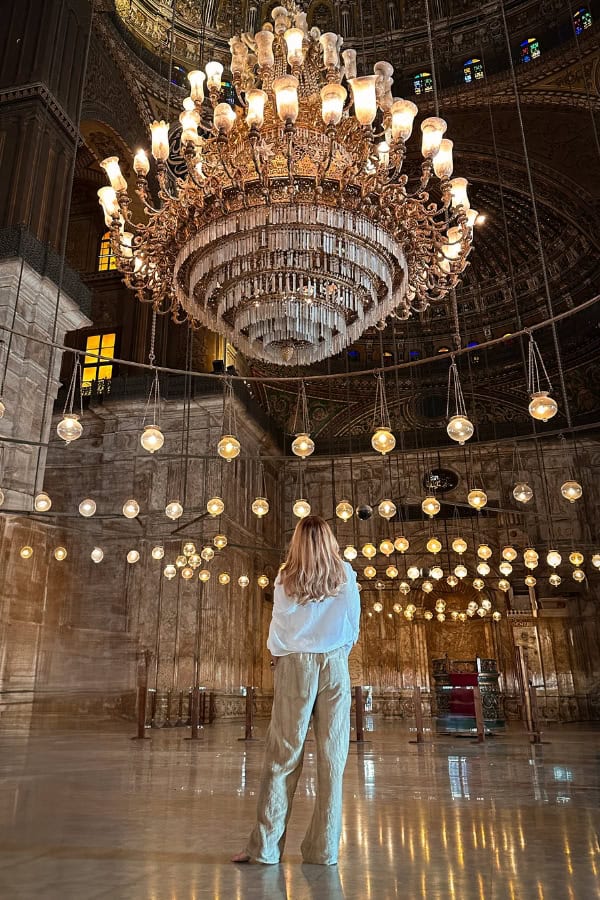
The mosque itself is beautiful, but it’s the view from the Citadel’s walls that steals the show. On a clear day, you can even spot the pyramids in the distance.
Khan el-Khalili Bazaar
Next, we stepped into the chaos of Khan el-Khalili, Cairo’s most famous bazaar. The narrow alleys are a maze of stalls selling everything from spices, jewelry, lanterns, perfumes, and souvenirs.
It’s lively, colorful, and crowded, so it can feel overwhelming at times. It’s also one of those quintessential Cairo experiences you can’t miss, even if it has a reputation as a bit of a tourist trap.
Even if you don’t buy anything, wandering through the bustle gives you a taste of everyday life in the city.
Late Lunch at Abou Tarek
After the sensory overload of the bazaar, we stopped for a late lunch at Abou Tarek, a Cairo institution known for its koshari.
This humble dish is a mix of pasta, lentils, rice, chickpeas, and crispy fried onions, all topped with spicy tomato sauce.
At Abou Tarek, you have various spice options, allowing you to tailor the heat level to your taste. It might be simple, but it’s absolutely delicious, and proof that Egyptian comfort food deserves just as much attention as its ancient history.
Evening at the Egyptian Museum (Tahrir Square)
We finished the day at the Egyptian Museum in Tahrir Square, the city’s most famous museum until the Grand Egyptian Museum fully takes over.
The collection is staggering: thousands of artifacts from across Egypt’s history. However, compared to the GEM visited the day before, it felt cramped and dated.
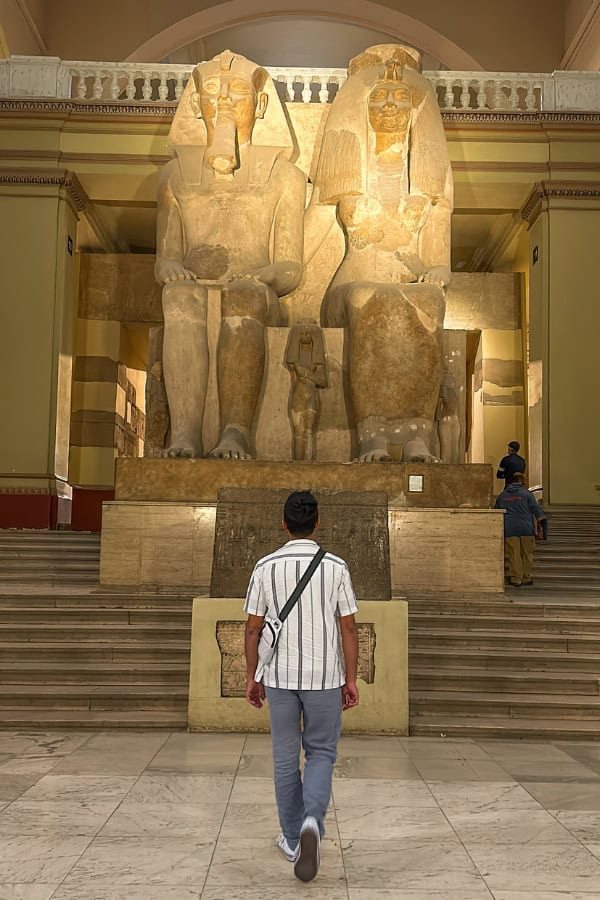
We were most interested in the artifacts from the famous Tutankhamun tomb, and seeing the room with the treasures was a truly memorable experience. However, there are currently plans to move these items to the Grand Egyptian Museum, so please check before you visit!
Top tip: Note that, as with the royal mummies, no photos are allowed inside Tutankhamun’s exhibit. There are guards in plain clothes who make sure you don’t.
Egypt Itinerary Day 6 – Saqqara
Saqqara, Dahshur & Flight to Luxor
Today was all about visiting the place where Egypt’s fascination with pyramids truly began – Saqqara, Dahshur, and Memphis.
These sites are often skipped in favor of Giza, but they’re just as important if you want to understand how pyramid building started and evolved.
Saqqara – The Step Pyramid of Djoser
Our first stop was Saqqara, home to the world’s very first pyramid: the Step Pyramid of Djoser, built around 4,700 years ago.
Designed by Imhotep (often referred to as the first architect in history), it’s the oldest large-scale stone structure in the world.
Walking around it feels surreal. This is where the concept of pyramid building began, centuries before the Great Pyramid at Giza.
The site itself is vast, with tombs, mastabas, and underground chambers. It’s much quieter than Giza, which makes wandering here feel like uncovering a secret part of Egypt’s history.
Dahshur – The Bent & Red Pyramids
Next, we continued to Dahshur, where you’ll find two fascinating pyramids that mark the transition to the “true” smooth-sided pyramid style.
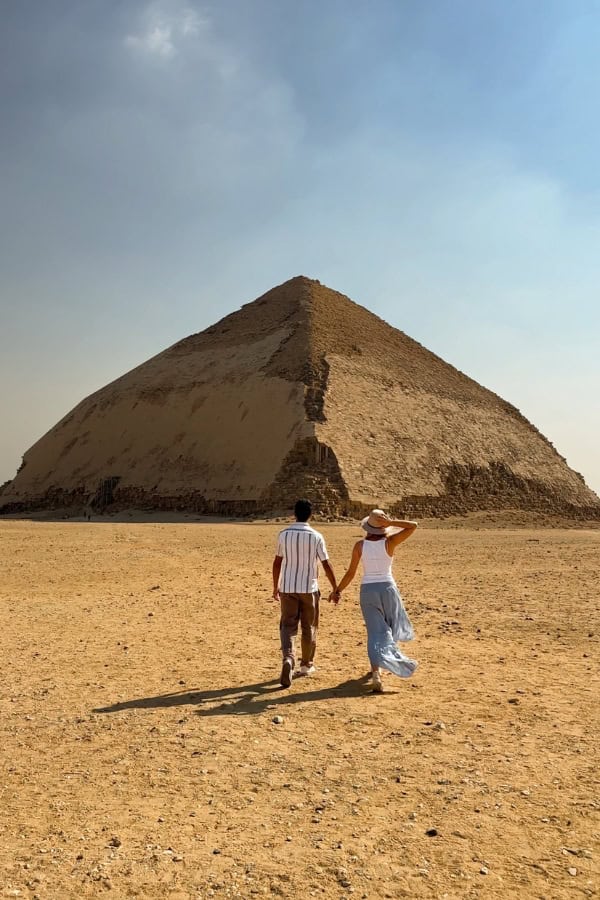
The Bent Pyramid looks unusual because its angle changes halfway up. Archaeologists believe that the builders adjusted the slope when they realized the structure might collapse, making it a crucial lesson in pyramid engineering.
Just nearby, the Red Pyramid is considered the first successful smooth-sided pyramid and the direct predecessor to the Great Pyramid of Giza. You can even go inside it, and since it’s far less crowded than Giza, the experience feels much more personal.
Memphis – Statue of Ramses II & Sphinx of Memphis
On the way back, we stopped at Memphis, the ancient capital of Lower Egypt. Today, little remains of the once-great city, but the open-air museum here is worth a visit for one main reason: the enormous statue of Ramses II.
Lying on its back, it gives you a sense of just how colossal these monuments once stood. The site also houses the smaller Sphinx of Memphis, carved from alabaster, which adds another layer of history to the day.
📌 Why You Shouldn’t Skip Saqqara, Dahshur & Memphis
These sites are the missing pieces of Egypt’s pyramid story. Saqqara shows where it all began, Dahshur demonstrates how engineers perfected their techniques, and Memphis ties it all together as the ancient capital.
Visiting them gives you context for Giza, and without that context, you’re only seeing the end of the journey.
Evening Flight to Luxor
After a full day of history, we headed to Cairo airport for an evening flight to Luxor. Flying is by far the easiest way to cover the distance.
It took us just over an hour, compared to a long 7 h drive. By the time we landed, we were ready for the next chapter: exploring Luxor, the world’s most impressive open-air museum.
Egypt Itinerary Day 7 – Luxor West
Sunrise Balloon ride and Luxor West Bank
Balloon ride at sunrise
We started our day with a sunrise hot air balloon ride over Luxor. There are many companies that offer this amazing activity, but we wanted to make sure we go up with someone trusted and experienced.
We heard some stories about companies cancelling at the last minute due to overbooking or just not showing up. Our friends recommend that we go with HodHod Hot Air Balloon.
Turns out they’re the first company to start in 1993, offering hot-air balloon rides in Luxor. Turns out we couldn’t have chosen better.
The team was extremely helpful, quick at communication, and very accommodating. Not to mention very competitive prices, which was an added bonus!
Floating above the Nile, we got to admire the Valley of the Kings from the air.
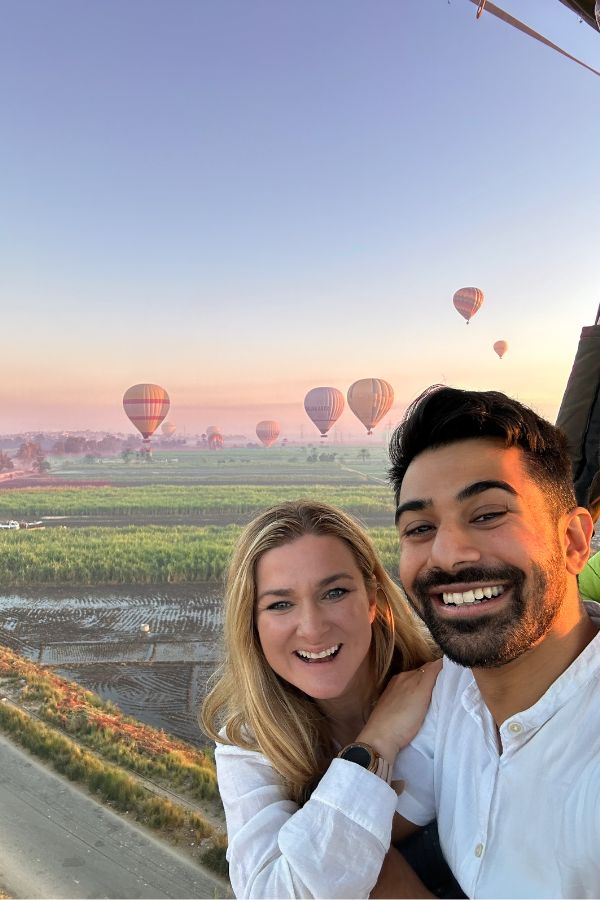
It was an incredible experience and one of the best ways to take in the scale of the West Bank. Please note that your experience will depend on the direction of the wind and weather.
After landing, we stopped at the Colossi of Memnon, two massive seated statues of Pharaoh Amenhotep III that once guarded his mortuary temple. They’re impressive in size and set the stage for the ancient sites ahead.
Valley of the Kings
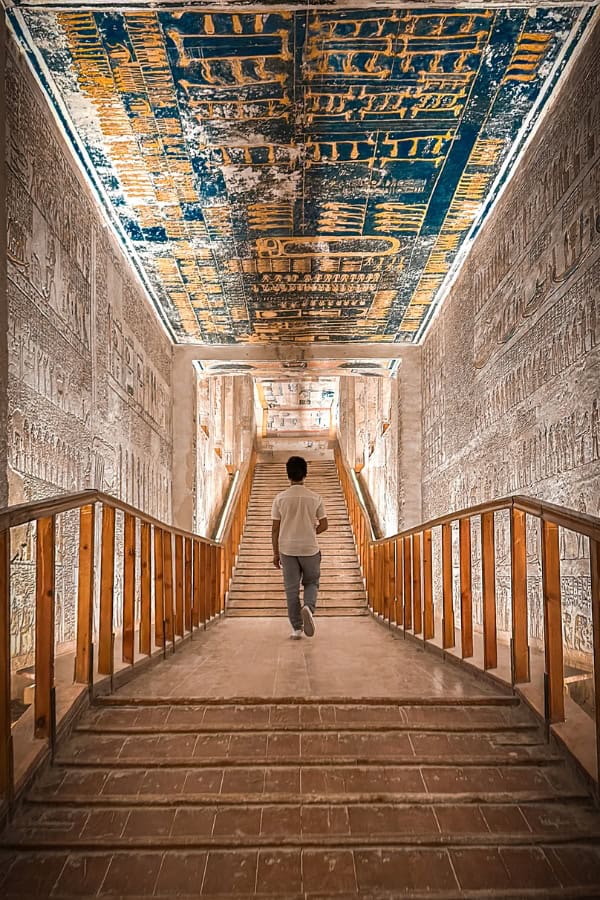
The next stop was the highlight of the West Bank: the Valley of the Kings. This necropolis is where Egypt’s pharaohs were buried, including Tutankhamun. The standard entry ticket is 600 EGP and covers three tombs, but we highly recommend paying extra to see the additional ones.
The exact tombs open changes every day for conservation purposes, so you won’t be able to see all of them unless you visit more than once.
We visited Tutankhamun’s tomb for an extra 700 LE, and it was absolutely worth it. Even though the treasures are now in museums, seeing his original burial place (with his mummy still inside) felt unforgettable.
From the Valley of the Kings, we took a short bus ride to the Temple of Hatshepsut, one of Egypt’s most striking temples. Built into the cliffs at Deir el-Bahari, its terraces stand out against the desert backdrop. Dedicated to one of Egypt’s few female pharaohs, it’s both impressive in scale and unique in design.
By early afternoon, we returned to our hotel, the Sonesta St. George, for some downtime by the pool. After a full day of sightseeing, this break was much-needed. In the evening, we had dinner at El Kababgy, where we tried traditional Egyptian dishes including stuffed pigeon and chicken tajin. It was the perfect way to end the day with local flavors before resting up for the next adventure.
Egypt Itinerary Day 8 – Luxor West
Luxor East Bank – Karnak & Luxor Temples
Karnak Temple
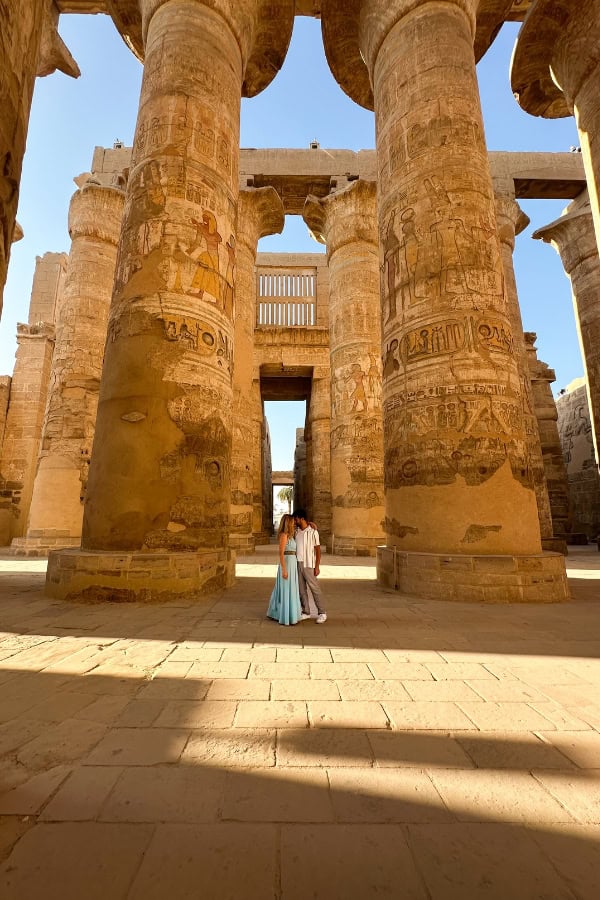
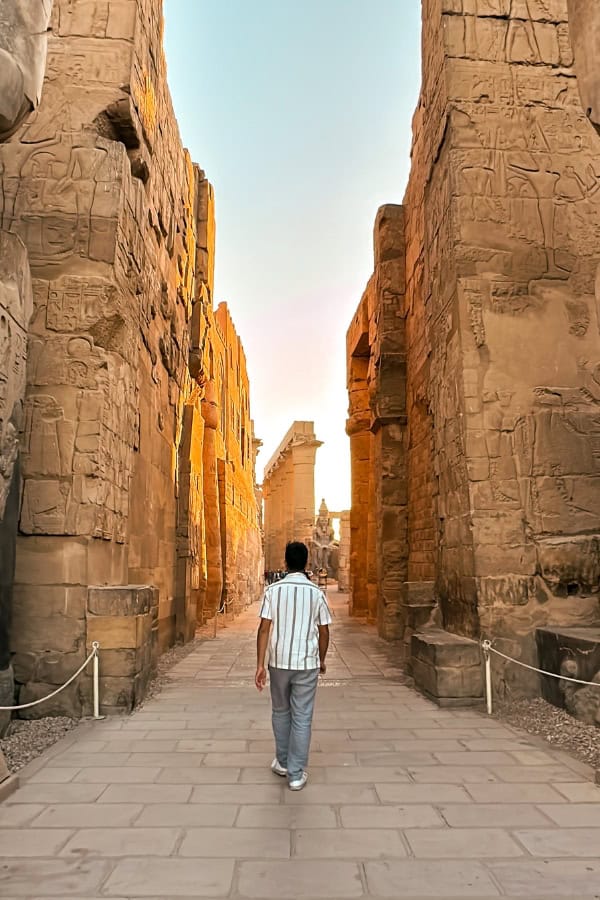
We started the morning early at Karnak Temple, arriving around 7 am to beat the crowds and the heat. The entry fee is 600 EGP. Walking into the Great Hypostyle Hall, with its 134 towering sandstone columns, was one of the most impressive sights of the whole trip.
Even though we had seen countless photos before, standing among the massive pillars gives you a sense of scale that no picture can capture.
By 9:30, more people had arrived, so we headed back to the hotel for breakfast and a few hours of relaxing with our family before exploring Karnak together in the afternoon.
However, if you want to explore, we recommend taking a taxi and visiting Dendeta Temple. This is a lesser-known and lesser-visited temple, but it is still absolutely amazing and worth exploring.
In the afternoon, we returned to Karnak Temple with a guide, and the visit was so much more engaging. Having someone explain the history, symbolism, and importance of different parts of the temple brought the site to life in a way that wandering on our own hadn’t. We’d definitely recommend visiting Karnak with a guide; it makes a difference.
Luxor Temple
From there, we continued to Luxor Temple (entry fee is 500 EGP) and the Avenue of Sphinxes. This long processional road connected the two great temples of Karnak and Luxor, lined with hundreds of sphinx statues. If you fancy a longer walk, the route is often open for pedestrians to walk the whole way between temples!
At sunset, Luxor Temple was really beautiful. The mix of golden light on the columns and the evening atmosphere made it one of our favorite temple visits.
We finished the day with dinner back at the El Kababgy restaurants. Usually, we try different places, but the food and service the night before made us want to come back for more traditional dishes.
Egypt Itinerary Day 9 – Abu Simbel
Journey to Abu Simbel
It was an early start (4 am) as we made the long drive from Luxor to reach Abu Simbel by afternoon. We actually split from our larger family group at this point, since they wanted to spend some days relaxing by the coast. It’s definitely an option for some needed downtime after the business of Cairo and Luxor, but we couldn’t skip Abu Simbel.
It is a long travel day, but the payoff is worth it. Seeing the massive temples carved into the rock face for the first time is one of those moments that makes the journey fade into the background.
We recommend staying overnight here to see the temples in the afternoon sun. If you visit after 2:30 pm, most tours are gone, and the site is almost empty, making it an even more special experience.
We arrived in the afternoon, had lunch, and then headed straight to the site around 2:30 pm. There are two temples at Abu Simbel.
Afternoon in Abu Simbel
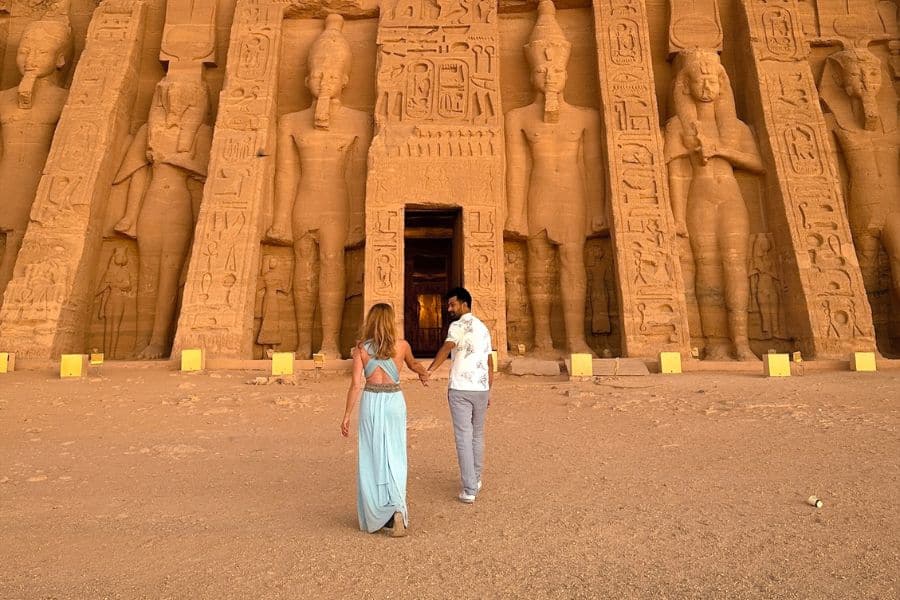
The first one is dedicated to Ramses II and the other to his queen, Nefertari. They are both impressive and so unique. The sheer size of the statues, combined with the detailed carvings inside, makes it one of the most impressive sites in all of Egypt.
The latest 2025 entrance fee: 822 EGP for adult foreigners. You can check other options on the official website. The site is open all year round from 6 am to 4 pm, with the exception of Ramadan. During the Holy Month, the site is open from 7 am to 3 pm.
One thing to note is that photography inside temples is free as long as you only use your phone. If you’re planning to use a tripod and a camera, then there is a separate fee for that.
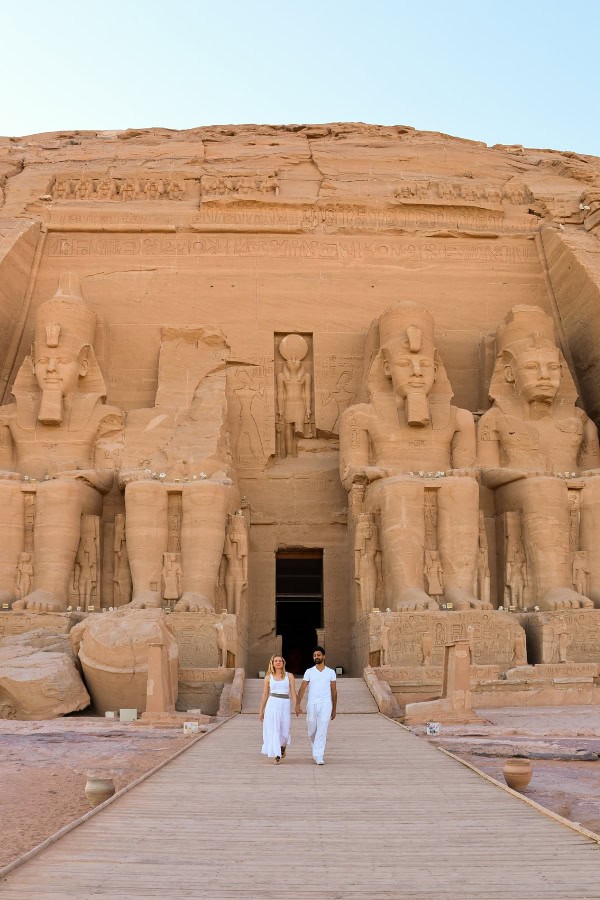
One of the most fascinating parts of Abu Simbel’s story is that what you see today is not its original location. In the 1960s, when the construction of the Aswan High Dam threatened to flood the temples beneath Lake Nasser, an international effort led by UNESCO relocated the entire complex, block by block, to higher ground.
Knowing that these massive temples were dismantled and rebuilt piece by piece makes standing before them even more incredible.
Sound & Light Show at Abu Simbel
We decided to stay at Abu Simbel and see Sound & Light Show. It was only $20 and our friends recommended that we see it.
If you have time before the evening Sound & Light Show, we recommend arranging a boat ride on Lake Nasser to see Abu Simbel from the water at sunset.
We didn’t know about it at the time, and wish we had. It must be a fantastic perspective to watch the temples glowing in the setting sun before returning to see them illuminated during the show.
The Sound & Light Show itself was a nice way to end the day, with the temples beautifully lit up against the night sky and the story of Ramses II and Nefertari told in front of the monuments themselves.
We preferred the light show in Abu Simbel to the light show in Jordan, Petra by Night, where it felt disjointed and didn’t fit the place. However, the preshow walk in Petra was magical.
Egypt Itinerary Day 10 – Aswan
Abu Simbel Sunrise & Aswan Highlights
We woke up early again to return to Abu Simbel for sunrise. Seeing the temples in the soft morning light was completely different from the afternoon before.
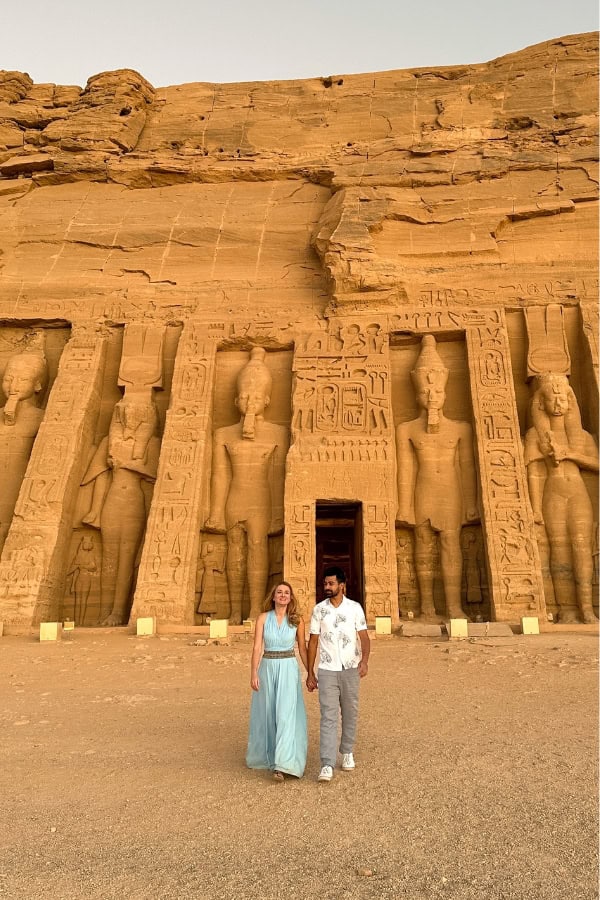
If you can, we highly recommend visiting twice: once in the afternoon and again at sunrise. It’s so different but equally beautiful. We preferred an afternoon visit as it was much quieter and we almost had the whole place to ourselves. Whereas in the morning, there were more people.
Afterwards, we began the drive back toward Aswan, stopping for a short boat ride on the Nile to reach the Temple of Philae.
Dedicated to the goddess Isis, this temple was also relocated during the construction of the Aswan High Dam and now sits beautifully on Agilkia Island. We really enjoyed our visit there and were glad we decided to have a guide to tell us all about the history of this incredible site.
Approaching it by boat makes the experience feel magical, with the columns and pylons rising directly from the water.
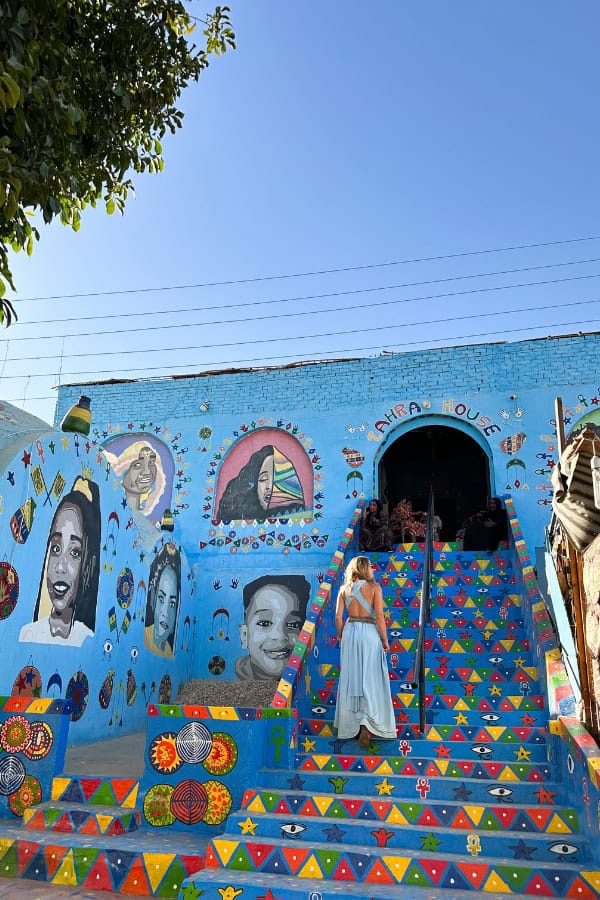
From there, we continued to a unique and very colorful Nubian village along the Nile. This stop wasn’t originally on our list, but because we had some time, we decided to visit it.
Painted houses, narrow lanes, and vibrant markets made it a fun and lively stop, offering a nice change of pace after days of temple visits. This is why we also added it to our itinerary here, as it was good to see a colourful side of Egypt.
In the evening, we hired a traditional felucca and watched the sunset on the Nile. It was a very romantic and beautiful experience for us as sunset lovers.
Later that night, we headed to the airport for our return flight to Cairo, ready for our last day of exploring Egypt before heading home.
Egypt Itinerary Day 11 – Cairo & return
Final day in Cairo & Flight Home
For our final day in Egypt, we squeezed in a few last experiences before heading to the airport. This time, we stayed on the other side of Giza, near the Sphinx entrance to the plateau. It is easy to walk from the hotel to the site as there are plenty of hotels in this area.
Below we shared the hotels/apartments that we stayed at or were on our list, but they were booked for our stay.
Starting the morning at the Pyramids of Giza allowed for some final photos. Visiting early in the day meant fewer crowds, especially around the sphynx, which most people visit at the end of their tour—it really felt like the perfect way to close the trip.
Standing once more in front of the only ancient wonder of the world still standing. And yes, it was still as impressive and breathtaking the second time!
From there, our driver took us to Coptic Cairo, one of the oldest parts of the city. This area is home to several important Christian landmarks, including the Hanging Church and the Church of St. Sergius and Bacchus, which is believed to have been built on the spot where the Holy Family sheltered during their flight into Egypt.
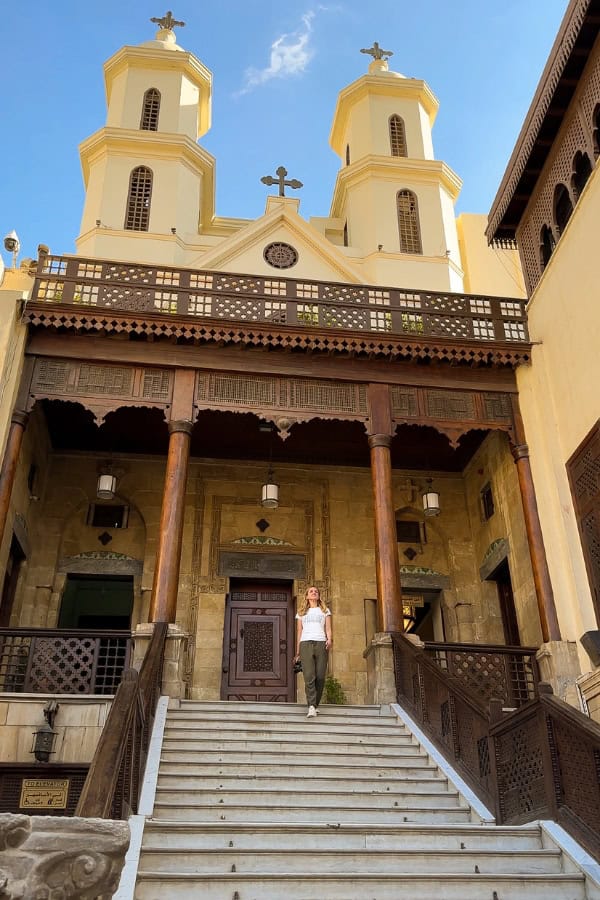
Walking through the narrow lanes here was a striking contrast to the bustle of modern Cairo, a reminder of Egypt’s rich and layered religious history. We almost felt like we were in not only a different city but a different country.
We originally didn’t have Coptic Churches in our Itinerary, but we still had time after our morning Giza trip, so we were happy we managed to see them before we left Egypt.
Prince Mohamed Ali Palace
Our final cultural stop was the Prince Mohamed Ali Palace (Manial Palace). This hidden gem is less visited than other Cairo’s main attractions. However, it’s worth the time if you have an hour to spare.
The palace combines Ottoman, Moorish, and Persian design influences, with beautifully decorated rooms and peaceful gardens. It was a calm, almost unexpected way to end the trip after so many ancient sites.
Afterwards, we headed straight to the airport for our evening flight home.
Add-ons to your Egypt Itinerary
If you have more than 11 days and want to include a bit more relaxing time, we recommend 2-3 days by the Red Sea.
Alternatively, if you prefer to spend more time exploring Egypt, we recommend you visit the White Desert. It is one place on our list we simply didn’t have time to explore, as it is at least 2 or 3 day trip.
Summary
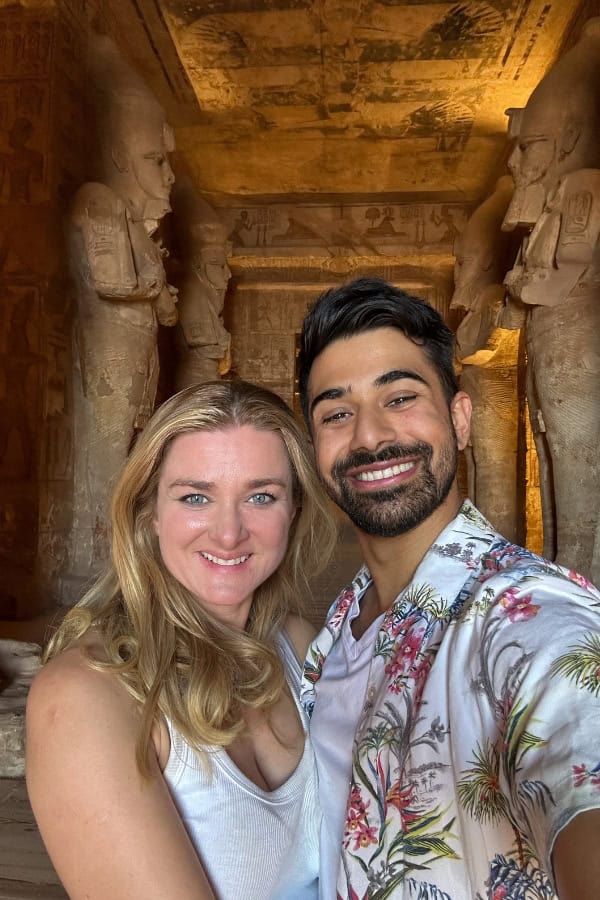
We created this itinerary to capture highlights of Egypt. We also included an add-on for each day in case you wanted to see more and prefer a faster-paced exploration.
This way, we tried to tailor this itinerary for those who might be travelling to Egypt as a family or group of friends, as well as those who want to see as much as possible.