
Food in Montenegro – Your culinary guide
When thinking about traditional food in Montenegro, most of us wouldn’t be able to name a single dish, apart from maybe Burek. However, Montenegrin cuisine is very diverse and delicious. It has been shaped by years of different cultures leaving their mark on this part of Europe. From Ottomans, to Austro-Hungarians and Venetians, you will recognise flavours based on their cuisines.
We are massive foodies, so for us, one of the most exciting parts of exploring new countries is trying as many traditional dishes as possible! We spent 7 day driving around Montenegro and exploring not only its hidden gems but also incredible food.
Sure, we sometimes get a surprised ‘Are you sure you want to order it?’ look from a waiter, but that’s part of the adventure for us – food is a way for us to better understand the culture of the places we visit.
Check out our 7-day Montenegro itinerary for some ideas and recommendations, and Is Montenegro Expensive? to see how you can save money visiting Montenegro.
We created this food guide to help you identify exactly what those dishes are when you see them on the menu. Additionally, it will help you decide which ones you would like to try and which ones are not your cup of tea. We honestly are glad we tried them all, and we would order a few more than once, but while we enjoyed others, we wouldn’t order them again. Don’t worry, with this guide in hand, you’ll know exactly what to eat and what to miss when you visit Montenegro!
Breakfast food in Montenegro
Most of the dishes in this section originated from the mountain area, and since over 80% of the country is covered in mountains, these are national staples. Most of them are simple but hearty, filling, and very tasty.
They are so filling that restaurants now serve them at lunches and dinners, as breakfast habits have changed over time. We covered them under the breakfast section for completeness.
Kačamak – probably the most filling food in Montenegro
Kačamac is a simple dish that combines cornmeal, cheese, and dairy – but don’t let the small ingredient list fool you into thinking this isn’t a hearty meal! It is prepared by slowly cooking cornmeal with milk and butter. The mix needs to be stirred constantly until it reaches a smooth, creamy consistency. Just before finishing, they fold in fresh cheese along with more butter. Restaurants usually serve it with a dollop of sour cream on top, just in case it wasn’t filling enough.

The best kačamak has a silky, porridge-like texture with pockets of melted cheese throughout. Justin is a huge cheese fan, so those little cheese bites were his favourite. The Kačamak we had only had cream on top, but restaurants can also serve it with crispy bacon bits or sausage. It must be even more tasty, but try not to eat right before heavy exercise, or you might get a stomachache!
Cicvara
Cicvara is another cornmeal-based dish that demonstrates how food in Montenegro cleverly utilizes simple ingredients. This creamy combination of cornmeal and cheese originated from the mountains and was traditionally served to provide energy for the hard day’s work.
It still appears on modern restaurant menus, so you can order it and give it a try. However, we recommend it for lunch or dinner, as it would be too heavy for breakfast, at least for us.
Priganice – most versatile food in Montenegro
Priganice holds a special place as one of the most versatile foods in Montenegro. These fried dough balls offer great versatility and serve as bread, an appetizer, or dessert, depending on preparation and accompaniments.
In flavour, priganice reminded us of donuts, but they were crispy on the outside and soft inside. Restaurants typically serve them hot and either plain with honey or stuff them with cheese, meat, or sweet fillings. They’re best served and eaten fresh for that extra crisp factor.

We had it for breakfast when we stayed in Konoba Celkin, and we couldn’t believe the size of the portion that came. Additionally, it came with honey and cheese on the side, allowing us to choose between a savory or sweet breakfast.
Priganice reminded Karolina of her childhood in Poland; a very similar sweet dough ball-like dish, racuchy.
Popara
This was the second dish that immediately brought memories of childhood for Karo. However, there is a significant difference between the Montenegrin and Polish versions. In Poland, the dish is sweet, whereas in Montenegro it is a savoury one. Popara is even simpler than others, but it is a very satisfying dish.
Restaurants prepare it by cutting stale bread into cubes and mixing them with hot milk, butter, cheese, and sometimes eggs. It is incredibly filling, and between Popara and a massive plate of Priganice, we really struggled to finish this hearty breakfast. In the picture of Priganice you can see popara on the left in the back. Unfortunately, we didn’t take a good picture of it.
When we ordered popara for our breakfast, the waiter gave us a stunned look. We asked him why he was so surprised, and he said it was a very simple meal. He said that in the past, it was mainly poor people who made it for breakfast, and he just didn’t expect tourists would even want to try it. It was still delicious, so it goes to show that simple doesn’t mean bad!
Njeguški pršut
High in the mountains above the Bay of Kotor, in the village of Njegušia, the most amazing dry-cured ham is produced. It rivals the best Italian prosciutto or Spanish jamón, but has its own unique character.

Apparently, the secret to its flavour lies in the village’s unique microclimate, where the wind from the mountains meets the salty air from the nearby sea.
The process begins with carefully selected pork legs, which producers salt and press for several weeks. Then they hang the meat in traditional stone buildings where alternating mountain and sea breezes cure it for 12 to 18 months.
The result is a ham of extraordinary complexity: sweet and salty, with a clean, intense flavor that speaks of the pristine mountain environment.
Restaurants serve it cut into paper-thin slices, accompanied by cheese, olives, and local wine. Njeguški pršut is an authentic taste of Montenegro in its purest form.
You’ll often find it incorporated into other classical Montenegrian dishes; stuffed inside cuts of veal with cheese, wrapped around chicken, or fried till crisp and crumbled on top of salad. It does make for a great addition to a lot of foods, but a fair warning that it can be quite salty, so if you’re sensitive, make sure you try a small bit first before committing fully!
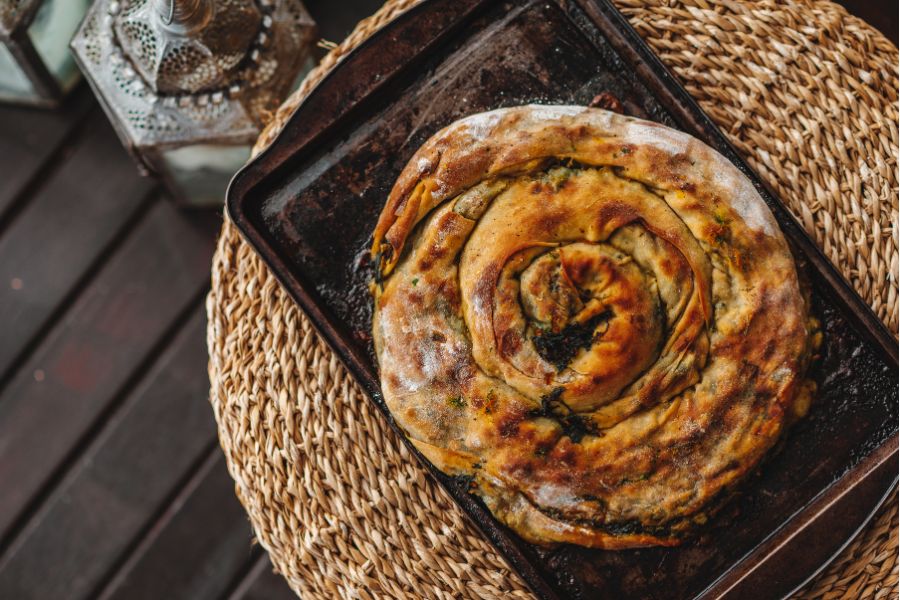
Burek – the most famous dish from Montenegro
Burek represents one of the most internationally recognized foods in Montenegro. However, the way it is prepared varies from versions found in other Balkan countries.

This flaky pastry dish consists of thin layers of dough filled with cheese, meat, spinach, or potatoes, then baked until golden and crispy. YUM!
Burek is a perfect dish to have on the go, but it is also perfect to serve on special occasions. Traditional Montenegrin burek often includes local cheeses and follows family recipes passed down through generations. The technique of stretching the dough paper-thin requires skill and practice, making homemade burek a source of pride for many Montenegrin cooks.
Best food for lunch and dinner in Montenegro
Montenegro seamlessly blends centuries-old Balkan traditions with Mediterranean influences, resulting in a cuisine that is distinctly unique. The interesting thing to note is that dishes originate from or are specific to particular regions.
In the mountains, you will find a lot of hearty dishes that sustained shepherds through harsh winters. The Adriatic coast, on the other hand, offers fresh seafood and more Italian-influenced dishes.
Ćevapi
We can’t write about food in Montenegro without mentioning ćevapi, the small, grilled meat sausages that have become synonymous with Balkan cuisine. In Montenegro, these finger-sized delicacies are more than just food, they’re a cultural institution.
Restaurants prepare it from a carefully balanced mixture of beef, lamb, and pork. They season it with garlic, salt, and secret family spice blends, and then grill it over wood charcoal.

We tried cevapi in different areas of Montenegro, and even though they were slightly different (thanks to unique local blends), the food was delicious and moreish. It was one of our favourite dishes in Montenegro (especially when they’re topped in cheese too) – we were really impressed with how juicy they were everywhere we went.
Njeguski Steak
When you want to treat yourself to something special, Njeguski steak is one of the most fancy foods in Montenegro. Picture this: a juicy beef steak stuffed with thin slices of famous Njeguški ham we’ve mentioned already, plus some local cheese. All this is then grilled until everything melts together beautifully.
The smoky, salty ham plays perfectly with the tender beef, while the melted cheese is that added bonus. It’s the kind of dish that makes you understand why food in Montenegro has such a reputation – they take their best ingredients and combine them in ways that just make sense. It might be a slightly more expensive dish, but it’s so worth it!
Lamb cooked “ispod sača”
Now this is where food in Montenegro gets unique and special. Imagine an entire lamb cooked under what appears to be a giant metal dome, with hot coals piled on top. That’s “ispod sača” and it means “from under the bell”
This isn’t something you simply cook for dinner. You don’t simply cook this for dinner. Families reserve this dish for weddings, special celebrations, and occasions when they truly want to impress guests.
The lamb slow-cooks for hours under that dome, becoming incredibly tender and picking up an amazing smoky flavor that only this method can achieve.

We were lucky to stop at the restaurant that served it and tried the lamb. It was so tender, succulent, and delicious.
Pottage
Pottage might not sound very glamorous. However, it’s one of those comfort foods that shows what food in Montenegro is all about. Think of it as the ultimate “whatever’s in the pantry” dish. This thick, hearty stew is made with grains, beans, and whatever vegetables are available. It often includes some leftover meat to add more flavour.
Every family has their own way of making it, which means you’ll never have the same pottage twice. It’s the kind of food in Montenegro that takes simple ingredients and turns them into something delicious and filling. Don’t let its humble appearance fool you; it is seriously satisfying.
We tried it twice: a simple vegetable dish and a meat pottage, and can recommend both. It is a perfect dish for lunch, especially if paired with a sandwich with Njeguški pršut and cheese.
Grilled octopus
Here’s where the coastal side of Montenegro’s food really shines. Chefs clean and score fresh octopus straight from the Adriatic, to prevent curling on the grill. Then they cook it fast over high heat. That’s it.

No fancy sauces or complicated seasonings, just a drizzle of olive oil, a squeeze of lemon, and a sprinkle of local herbs.
The trick is not to overcook it, as nobody wants a chewy texture. When done right, you get tender pieces with just a hint of char from the grill that taste delicious.
Black Risotto
Perhaps no dish better represents the marriage of Mediterranean technique and local ingredients than crni rižot, Montenegro’s version of black risotto. Made with cuttlefish or squid, this dramatic dish gets its striking black color from the ink of the cephalopods. The rice is slowly cooked in a rich stock made from fish bones and seafood trimmings, with the squid ink added gradually to create the characteristic dark color.
The best crni rižot has a creamy texture similar to Italian risotto, but with a briny, oceanic flavor that’s intensely satisfying. Chefs stir pieces of tender squid through the rice, and finish the dish with a drizzle of local olive oil and a sprinkle of parsley.

Italian food in Montenegro
The proximity to Italy, particularly the Veneto region, has left an indelible mark on Montenegro’s coastal cuisine. Restaurants feature pasta dishes on menus in coastal towns, but they often adapt them with local ingredients and techniques.
Chefs might toss fresh pasta with locally caught mussels and clams, or serve it with a sauce they make from the famous Njeguški pršut.
Pizza, too, has found a home in Montenegro, but with distinctly local toppings. Don’t be surprised when you find pizza with kajmak topping instead of mozzarella, or with paper-thin slices of pršut. We had lovely pizza in Kotor in Pizza Pronto. They serve delicious pizza, but if you’re on the go, you can also grab a slice with you.
These adaptations aren’t fusion for fusion’s sake—they’re the natural evolution of cuisine as it crosses borders and adapts to local tastes and ingredients.
Food in Montenegro – Desserts
Baklava
Montenegro’s desserts are heavily influenced by Ottoman cuisine, with baklava being perhaps the most famous sweet treat. Bakers prepare it by brushing layers of paper-thin phyllo pastry with butter and fill them with chopped nuts (walnuts or pistachios). They then bake them until golden and soak them in honey syrup.
The result is a dessert of incredible richness with layers of crispy pastry, crunchy nuts, and sweet honey.

Local variations of baklava include different nut combinations and the addition of local ingredients, such as rose water or orange blossom water.
Krempita: The Cream Cake
Another beloved dessert is krempita, a cream cake that’s popular throughout the former Yugoslavia. The Montenegrin version typically consists of layers of puff pastry filled with vanilla custard and topped with powdered sugar. The best krempita has a delicate balance between the crispy pastry and the smooth, creamy filling.
This dessert is often served at celebrations and special occasions, and many bakeries throughout Montenegro have their own variations. Some add a layer of whipped cream on top, while others incorporate different flavors into the custard filling.
A Traveler’s Guide to Food in Montenegro
Traditional Konobas: Where Authenticity Lives
For the most authentic Montenegrin dining experience, seek out traditional konobas. Those small, family-run restaurants that specialize in local cuisine.
These often occupy historic buildings with stone walls and wooden beams. It creates a very rustic atmosphere that feels both welcoming and inviting.
The menus at konobas are typically short with not loads of choices. They focus on dishes that the kitchen does best, often featuring ingredients sourced from local producers.
Don’t expect fast service at a konoba. In Montenegro everyone is taking their time to enjoy the food. Meals are where conversation flows as freely as the wine.

The staff, often family members, take pride in explaining dishes and making recommendations based on seasonal availability and personal preferences.
Markets and Local Shopping
Montenegro’s markets are a treat for food lovers. Markets offer a wide range of products, from fresh produce to artisanal items.
They are a great place to pick up food for a picnic or a day of exploring. Most towns have their own markets, but make sure to visit early to get the freshest and best products.
For those interested in taking a piece of Montenegro home, look for vacuum-packed Njeguški pršut, bottles of local olive oil, and jars of ajvar or other traditional preserves. These make excellent gifts and allow you to recreate some of Montenegro’s flavors in your kitchen.
The Modern Food Scene in Montenegro
Contemporary Interpretations
While traditional cuisine remains the foundation of Montenegro’s food culture, a new generation of chefs is beginning to reinterpret classic dishes with modern techniques and international influences.
Restaurants in major cities, such as Podgorica, and along the coast (like Tivat and Kotor) are experimenting with fusion cuisine and farm-to-table concepts. All this whilst still maintaining respect for traditional flavors and ingredients.
These modern variations might include deconstructed ćevapi presented as an elegant appetizer, or traditional mountain cheeses incorporated into contemporary pasta dishes.
The key is that these new dishes build upon rather than replace the traditional cuisine. That they create exciting new dishes while honoring the past.

International Recognition
Montenegro’s cuisine is gaining international recognition, with food writers and culinary travelers discovering the country’s unique flavors and traditions.
This attention is encouraging local producers to maintain high standards and traditional methods while also inspiring innovation and creativity in the kitchen.
The country’s small size and relatively undeveloped tourism infrastructure mean that visitors can still experience authentic local culture and cuisine without the commercialization that has affected some other European destinations. This authenticity is perhaps Montenegro’s greatest culinary asset.
Summary

Montenegro’s cuisine offers something increasingly rare in today’s world: authenticity. This is food that’s deeply rooted in place and tradition and shaped by its geography and history.
From the comforting warmth of mountain kačamak to the richness of black risotto on the coast, there is a story behind them.
The one that is consistent no matter where you are is that people in Montenegro have learned to make the most of simple ingredients and turn them into delicious dishes.
For us, the food in Montenegro was the biggest surprise. We didn’t expect much when we got there, but with each meal, it won us over and over again.
We hope that this guide provided you with a good overview of what food to expect during your trip to Montenegro, and that you will also remember to try more local konobas for authentic and traditional flavours.
We learnt that in Montenegro, food is never just about sustenance; it’s about connection, tradition, and the simple pleasure of sharing good flavors with people you care about.


